07/17/2026: FUNDAMENTAL OF PISTOL TACTICS / PRIVATE TRAINING EVENT: SOUTH DAKOTA

$800.00
sold out

Course Title: Fundamental Pistol Tactics — Private Class

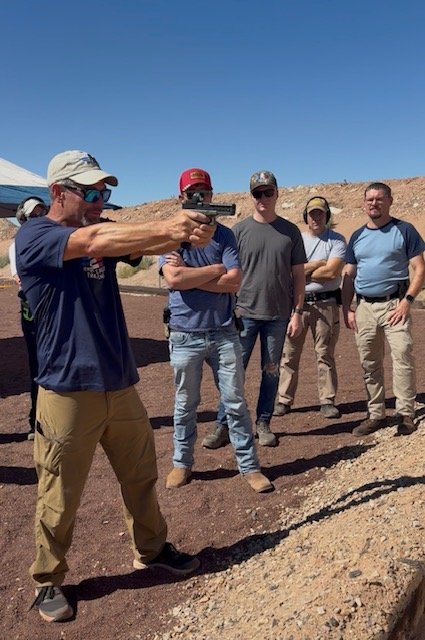
Course Overview This private class is a focused, one-on-one (or one student with a personal instructor) curriculum designed to develop safe, efficient, and repeatable pistol handling and tactical skills. Lessons emphasize fundamentals, marksmanship under stress, movement, cover usage, reloads, malfunction management, and decision-making. The pace is customized to the student’s experience level, learning goals, and any legal or local restrictions.

Prerequisites

  • Legal eligibility to possess and operate a pistol in the student’s jurisdiction.

  • Basic knowledge of pistol components and safe handling.

  • Medical clearance if needed (student must disclose any conditions affecting safe live-fire participation).

  • Personal protective equipment: eye and ear protection; closed-toe shoes; hat recommended.

  • Firearm and ammunition (instructor can supply or advise). Minimum 150–350 rounds recommended for a full-day private session.

Course Duration Options

  • Half Day (4 hours): Fundamentals intensive (sight alignment, trigger control, basic movement, reloads, malfunctions)

  • Full Day (8 hours): Comprehensive fundamentals plus decision drills, intermediate movement, stress inoculation

  • Multi-Day (2–3 days): Deep skill-build, scenario training, custom goals (competency-based progression)

Learning Objectives By the end of the private session the student will be able to:

  • Demonstrate rock-solid safety practices and range discipline.

  • Present, aim, and fire the pistol with consistent fundamentals: grip, stance, sight alignment, sight picture, trigger control, follow-through.

  • Engage single and multiple targets with controlled pairs, doubles, and transitions.

  • Move safely and accurately while shooting; use cover and concealment effectively.

  • Perform efficient reloads (tactical and speed) and clear common malfunctions under stress.

  • Make calibrated use-of-force decisions appropriate to local law and personal defense scenarios.

  • Execute a personal plan for continued practice and skill maintenance.

Lesson Plan Outline

Session 1 — Safety & Baseline Assessment (30–45 minutes)

  • Review legal and ethical responsibilities of carrying and using a firearm.

  • Safety brief and emergency procedures (range commands, ceasefire, evacuation).

  • Equipment check: firearm, holster, mags, ammo, PPE.

  • Dry-fire baseline: observe grip, stance, sight picture, trigger press, presentation from holster (if applicable).

  • Live-fire baseline: 10–15 rounds at 7–10 yards to establish accuracy, recoil management, and to identify corrective targets.

Session 2 — Fundamentals: Grip, Stance, Sight, Trigger (45–75 minutes)

  • Drill: Dry-fire repetitions with coaching focusing on:

    • Grip pressure and thumb placement

    • Dominant-eye considerations and cheek weld / sight alignment

    • Natural point of aim and stance (isosceles vs. modified)

    • Trigger reset and controlled press

  • Live-fire drills:

    • 5x5 at 7 yards: slow, focused shots emphasizing sight alignment and trigger control

    • Immediate feedback, video or coach-assisted observation

Session 3 — Reloads & Malfunction Management (45–60 minutes)

  • Demonstrate and coach:

    • Administrative and tactical reloads

    • Immediate action: tap-rack-bang (or preferred method), clearing stovepipes, double feeds

  • Drills:

    • Controlled reloads under time pressure

    • Failure drills: perform a stage where a malfunction is induced; student diagnoses and clears, then reengages target

Session 4 — Drawing & Presentation (if student carries) (30–45 minutes)

  • Safe presentation from holster: draw stroke, presentation, index finger discipline, muzzle awareness

  • Dry iterations to perfect smoothness and consistency

  • Live-fire: draw and fire single shot at 3–5 yards; progress to 2–3 shot presentations

  • Emphasis on clothing, holster type, cover garments, and concealment considerations

Session 5 — Speed, Accuracy, and Transitions (45–75 minutes)

  • Drills:

    • Controlled pairs and doubles to achieve fast accurate follow-up shots

    • Target transitions: engage multiple threat locations with focus on speed and sight re-acquisition

    • Failure drill (two to the body, one to the head) adapted to student comfort and legal/ethical concerns

  • Timing metrics recorded for baseline improvement

Session 6 — Movement and Use of Cover (45–75 minutes)

  • Principles: angles, exposure reduction, controlled movement, shooting on the move fundamentals

  • Drills:

    • Lateral movement while engaging target—start slow, progress speed while maintaining hits

    • Use of hard and soft cover: present, shoot, move, obtain new firing position

    • Break contact / retreat drills for practical self-defense application

LOCATION: HAWLEY RANCH

18127 468 AVE

CLEAR LAKE, SD. 57226

Course Title: Fundamental Pistol Tactics — Private Class

Course Overview This private class is a focused, one-on-one (or one student with a personal instructor) curriculum designed to develop safe, efficient, and repeatable pistol handling and tactical skills. Lessons emphasize fundamentals, marksmanship under stress, movement, cover usage, reloads, malfunction management, and decision-making. The pace is customized to the student’s experience level, learning goals, and any legal or local restrictions.

Prerequisites

  • Legal eligibility to possess and operate a pistol in the student’s jurisdiction.

  • Basic knowledge of pistol components and safe handling.

  • Medical clearance if needed (student must disclose any conditions affecting safe live-fire participation).

  • Personal protective equipment: eye and ear protection; closed-toe shoes; hat recommended.

  • Firearm and ammunition (instructor can supply or advise). Minimum 150–350 rounds recommended for a full-day private session.

Course Duration Options

  • Half Day (4 hours): Fundamentals intensive (sight alignment, trigger control, basic movement, reloads, malfunctions)

  • Full Day (8 hours): Comprehensive fundamentals plus decision drills, intermediate movement, stress inoculation

  • Multi-Day (2–3 days): Deep skill-build, scenario training, custom goals (competency-based progression)

Learning Objectives By the end of the private session the student will be able to:

  • Demonstrate rock-solid safety practices and range discipline.

  • Present, aim, and fire the pistol with consistent fundamentals: grip, stance, sight alignment, sight picture, trigger control, follow-through.

  • Engage single and multiple targets with controlled pairs, doubles, and transitions.

  • Move safely and accurately while shooting; use cover and concealment effectively.

  • Perform efficient reloads (tactical and speed) and clear common malfunctions under stress.

  • Make calibrated use-of-force decisions appropriate to local law and personal defense scenarios.

  • Execute a personal plan for continued practice and skill maintenance.

Lesson Plan Outline

Session 1 — Safety & Baseline Assessment (30–45 minutes)

  • Review legal and ethical responsibilities of carrying and using a firearm.

  • Safety brief and emergency procedures (range commands, ceasefire, evacuation).

  • Equipment check: firearm, holster, mags, ammo, PPE.

  • Dry-fire baseline: observe grip, stance, sight picture, trigger press, presentation from holster (if applicable).

  • Live-fire baseline: 10–15 rounds at 7–10 yards to establish accuracy, recoil management, and to identify corrective targets.

Session 2 — Fundamentals: Grip, Stance, Sight, Trigger (45–75 minutes)

  • Drill: Dry-fire repetitions with coaching focusing on:

    • Grip pressure and thumb placement

    • Dominant-eye considerations and cheek weld / sight alignment

    • Natural point of aim and stance (isosceles vs. modified)

    • Trigger reset and controlled press

  • Live-fire drills:

    • 5x5 at 7 yards: slow, focused shots emphasizing sight alignment and trigger control

    • Immediate feedback, video or coach-assisted observation

Session 3 — Reloads & Malfunction Management (45–60 minutes)

  • Demonstrate and coach:

    • Administrative and tactical reloads

    • Immediate action: tap-rack-bang (or preferred method), clearing stovepipes, double feeds

  • Drills:

    • Controlled reloads under time pressure

    • Failure drills: perform a stage where a malfunction is induced; student diagnoses and clears, then reengages target

Session 4 — Drawing & Presentation (if student carries) (30–45 minutes)

  • Safe presentation from holster: draw stroke, presentation, index finger discipline, muzzle awareness

  • Dry iterations to perfect smoothness and consistency

  • Live-fire: draw and fire single shot at 3–5 yards; progress to 2–3 shot presentations

  • Emphasis on clothing, holster type, cover garments, and concealment considerations

Session 5 — Speed, Accuracy, and Transitions (45–75 minutes)

  • Drills:

    • Controlled pairs and doubles to achieve fast accurate follow-up shots

    • Target transitions: engage multiple threat locations with focus on speed and sight re-acquisition

    • Failure drill (two to the body, one to the head) adapted to student comfort and legal/ethical concerns

  • Timing metrics recorded for baseline improvement

Session 6 — Movement and Use of Cover (45–75 minutes)

  • Principles: angles, exposure reduction, controlled movement, shooting on the move fundamentals

  • Drills:

    • Lateral movement while engaging target—start slow, progress speed while maintaining hits

    • Use of hard and soft cover: present, shoot, move, obtain new firing position

    • Break contact / retreat drills for practical self-defense application

LOCATION: HAWLEY RANCH

18127 468 AVE

CLEAR LAKE, SD. 57226

. Participant Required Equipment

● Pistol, holster, magazines

● Ear protection, electronic is preferred

● Eye protection, Z87 compliant is preferred

● Sturdy belt

handheld flashlight

● 100 rounds of pistol ammo

● Water, food, snacks for all day

● Long pants

● Closed toed shoes

● Long sleeve shirt

● Gloves